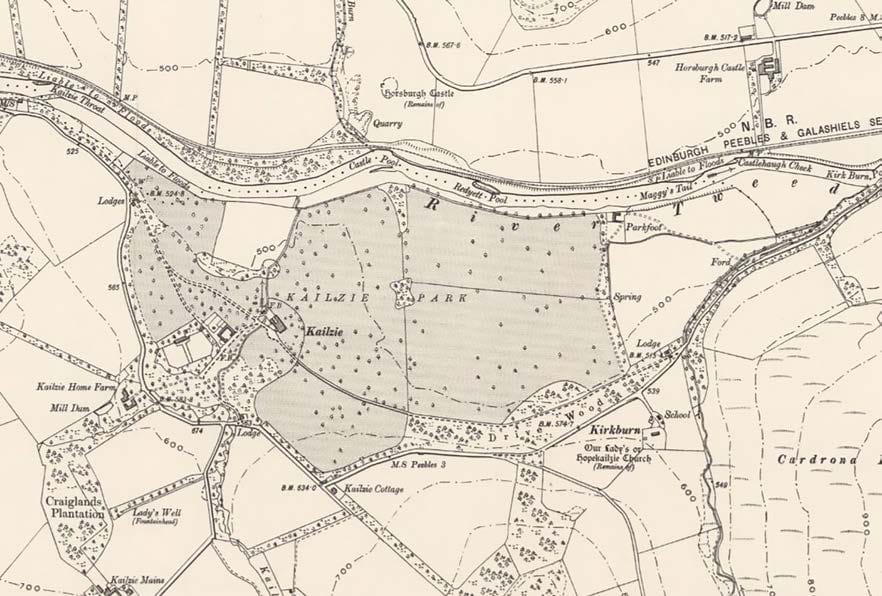
Kailzie’s story reaches back to the 13th century, first recorded as Hopkailzie and Hopkeiloc. Over centuries, the land passed through the hands of families including the Tweedies, the Earls of Traquair, the Burnetts, the Balfours and the Plenderleiths. Each generation shaped the Estate in lasting ways, planting trees, defining boundaries and creating parkland that still blends naturally into the surrounding hills.
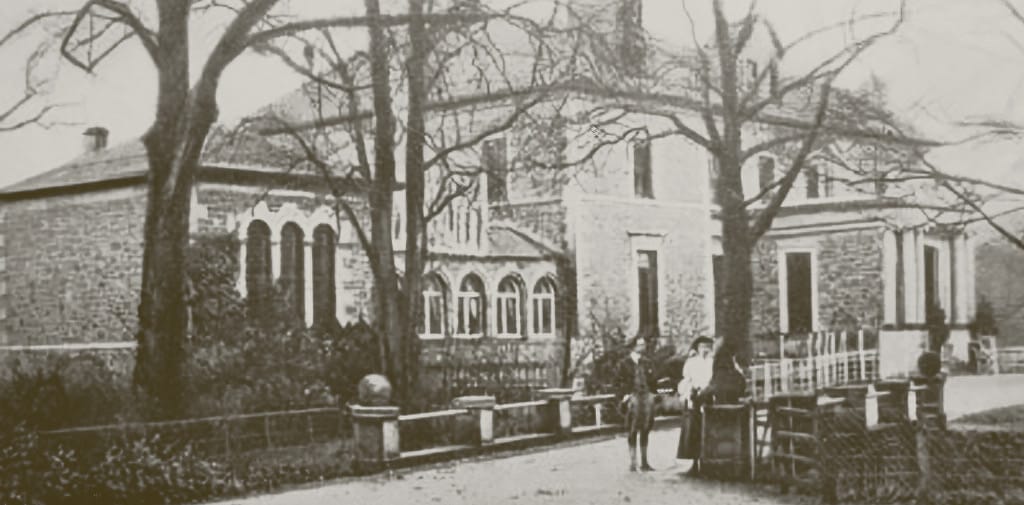
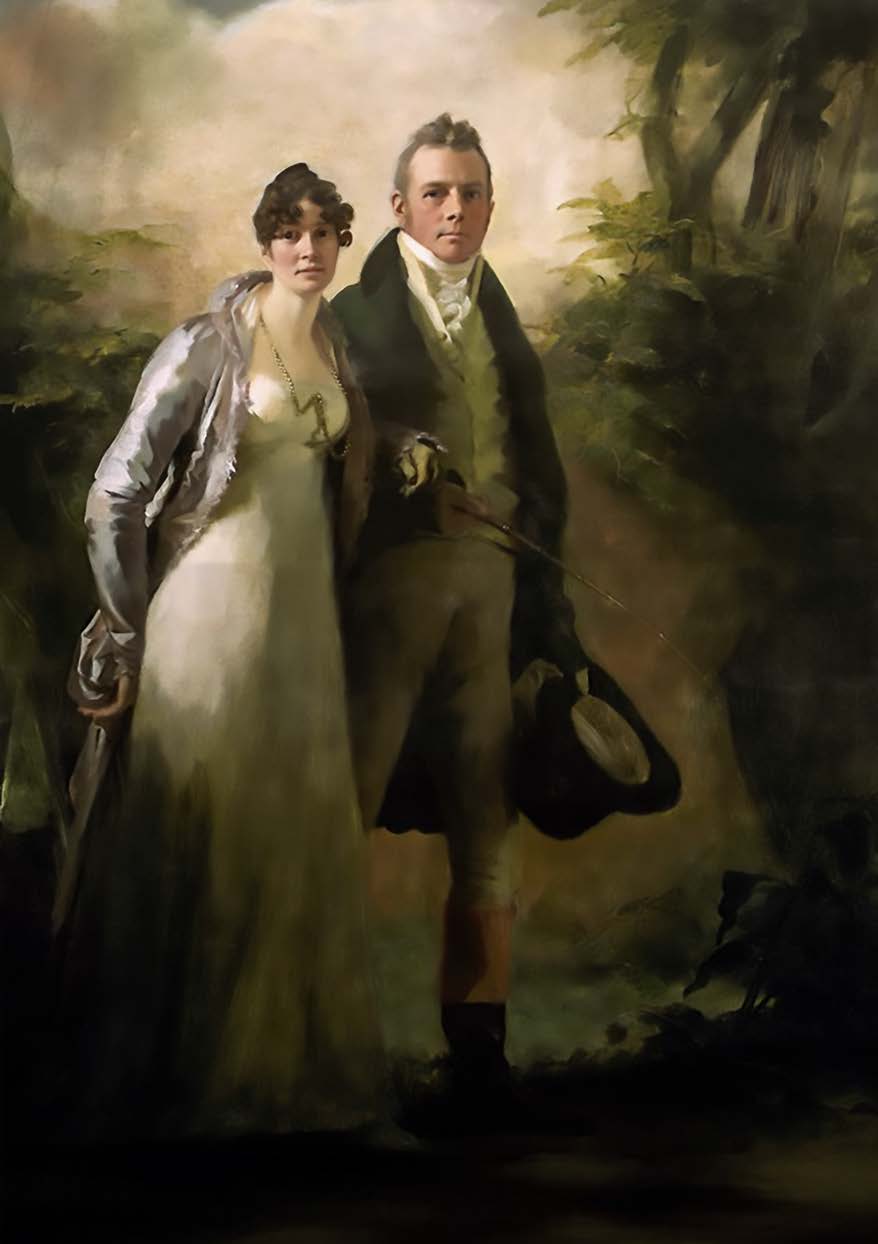
In the early nineteenth century, Robert Nutter Campbell, a Glasgow merchant, brought new focus to Kailzie. He built a grand house overlooking the Tweed Valley and laid out the walled garden and courtyard that remain central to the Estate today. Although the house itself no longer stands, its legacy endures in the structure of the landscape and the sense of order and openness that defines Kailzie.
At the heart of Kailzie lies the walled garden, enclosed by original eighteen foot walls built in 1811. Inside, the world feels softer and stiller. Paths wind through herbaceous borders, copper beech hedges and seasonal planting that shifts gently throughout the year. A sundial by A. Adie of Edinburgh stands at the centre, quietly marking the passage of time.
The garden was revived in the 1960s by Lady Angela Buchan Hepburn, who transformed it from overgrown ground into a place of elegance and abundance. She introduced the long borders, created the Laburnum Walk in 1980 and later added the rose garden, bringing structure, colour and fragrance back to the space. Along the north wall, the Mackenzie and Moncur glasshouse shelters tender and exotic plants, glowing softly in changing light.
Among the Estate’s oldest surviving features is the seventeenth century dovecot, a quiet stone presence that has witnessed generations come and go. Nearby stands the remarkable Kailzie Larch, planted in 1725 and now one of the oldest surviving European larches in Scotland. These landmarks offer tangible links to the past, anchoring the Estate’s story in living history.
Beyond the garden walls, woodland paths invite exploration. The Burnside Walk follows the Kailzie Burn, while Major’s Walk leads to open lawns and the quiet duck pond, where reflections ripple across the water. The wider arboretum is among the most significant in Scotland, home to champion trees and rare species planted over generations.
Seasonal change is ever present, from carpets of snowdrops and bluebells in spring to rich foliage in autumn. Wildlife thrives here, with red squirrels, otters, woodland birds and occasional glimpses of ospreys and kingfishers, moments that reward patience and attentiveness.
When the gardens reopened to the public in the early 1970s, Kailzie became a place to share, where history, hospitality and nature meet. The former stables and courtyard now welcome visitors with a café and gift shop, while the wider Estate continues to evolve through fishing, retreats and quiet stays.
Throughout its long history, Kailzie has remained a place of connection, between land and people, past and present. It is a landscape shaped with care, inviting each visitor to slow down, explore gently and feel a sense of belonging within its enduring story.

Richard & Louise Vardy